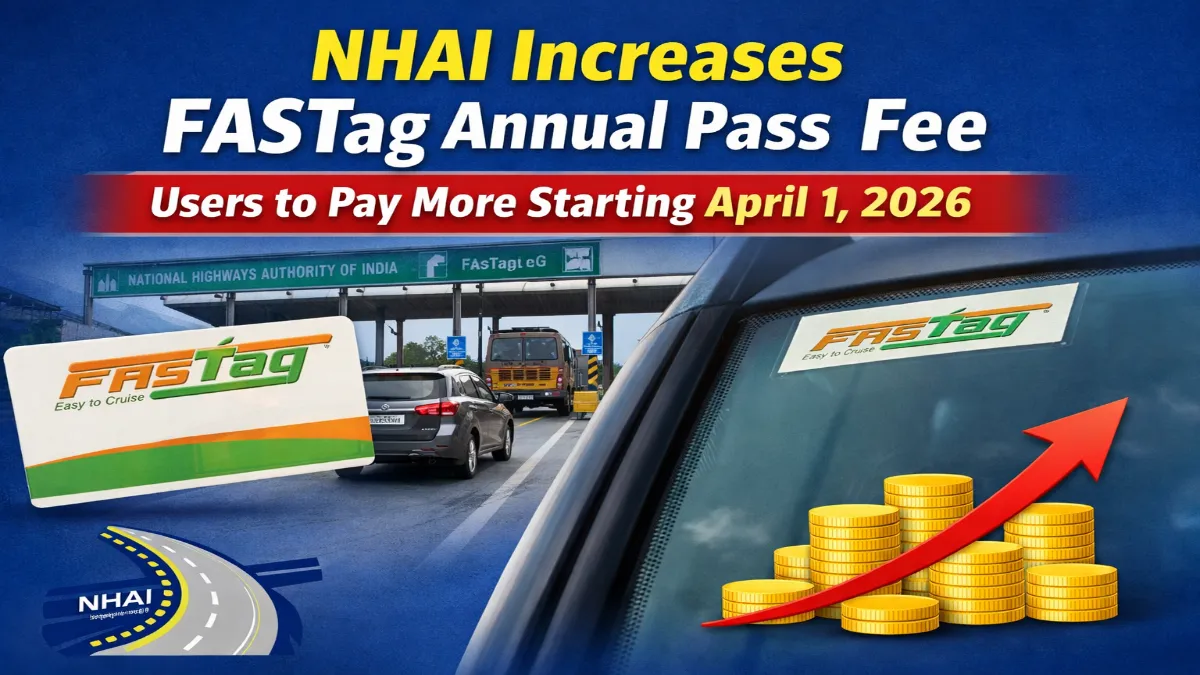
New FASTag Charges Announced for Highway Users
The National Highways Authority of India (NHAI) has announced an increase in the FASTag annual pass fee, which will come into effect from April 1, 2026. The decision means that vehicle owners using the FASTag system on national highways will have to pay more for the annual pass starting in the new financial year.
FASTag has become a mandatory electronic toll collection system across most toll plazas in India. The move by NHAI is aimed at improving highway infrastructure, maintaining toll operations, and ensuring smoother digital toll payments across the country.
What FASTag Is and Why It Matters
The FASTag is a digital toll payment system that uses Radio Frequency Identification (RFID) technology. The FASTag sticker is attached to the windshield of a vehicle and allows automatic toll deduction from a linked bank account or digital wallet when the vehicle passes through a toll plaza.

The system was introduced to reduce traffic congestion at toll booths and promote cashless payments on highways. Today, millions of vehicles across India use FASTag for faster and more convenient travel on national highways.
Fee Increase from April 1, 2026
According to the announcement by NHAI, the revised FASTag annual pass fee will apply from April 1, 2026, aligning with the start of the new financial year.

The fee adjustment is part of routine revisions that are occasionally made to support highway maintenance, infrastructure upgrades, and operational costs. The authority has indicated that the increase will affect users who opt for annual passes linked to specific toll plazas or highway routes.
Although the change may slightly increase travel costs for frequent highway users, officials believe the FASTag system will continue to provide faster toll payments and reduce waiting time at toll plazas.

Impact on Daily Highway Commuters
The fee hike may particularly affect people who regularly travel on national highways, including daily commuters, transport operators, and long-distance travelers. However, the digital toll collection system still offers several benefits such as shorter waiting times, automatic payments, and reduced fuel consumption caused by long queues.
Authorities also highlight that FASTag has significantly improved traffic flow at toll plazas since its nationwide implementation.

Government’s Push for Digital Toll Collection
The government has been actively promoting digital payment systems in transportation, and FASTag is a major part of that initiative. By making toll payments electronic, the system helps reduce cash handling, improves transparency, and speeds up highway travel.
The National Highways Authority of India continues to expand and upgrade highway infrastructure across the country, and toll revenue plays a key role in funding these projects.
What Users Should Do
FASTag users are advised to check updated fee details with their banks or official FASTag service providers before April 1, 2026. Ensuring that the FASTag wallet or linked bank account has sufficient balance will help avoid any inconvenience while passing through toll plazas.
Despite the increase in the annual pass fee, FASTag remains one of the most convenient and efficient ways for motorists to pay toll charges on India’s growing network of national highways.